“The law from Your mouth is more precious to me than thousands of pieces of gold and silver.” Psalm 119:72 (BSB)
Are you familiar with the London Baptist Confession of Faith (LBCF)? If you are not, I encourage you to read it and try to understand what it is saying. Effectively it is the Presbyterian confession of faith—the Westminster Confession—but corrected in all the places where the WCF needed correction. 😊
That is really the honest way Baptists look at it—we just never say that out loud. In paragraph six of the first chapter of the LBCF, it states something we need to note about the Word of God. It says, “The whole counsel of God, concerning all things necessary for His own glory, man’s salvation, faith, and life, is either expressly set down or necessarily contained in the Holy Scripture, unto which nothing at any time is to be added, whether by new revelation of the Spirit or traditions of men.” There is a phrase there—“expressly set down or necessarily contained”—that we want to keep in mind.
This was effectively the topic of the debate about the Dorean Principle: the idea that when you adapt the Word of God, when you take what God has said and restate it in other words, there is a sense in which you are still communicating the same thoughts of God that He has revealed in His Word. If it is a doctrine that we can prove is necessarily contained in the Word of God, then we can rightly say that it has some of the same qualities as the Word of God. That is what I intend to prove to you.
The Premise: The Word of God is Priceless
What I want to show you is that the Word of God is priceless. I will demonstrate to you that the Word of God is priceless in two ways (although there may be more). One of those ways will be by reviewing several Scriptures about the Word of God itself—the Word testifies about itself. Believer, you are indwelt with the Holy Spirit, and the Holy Spirit will bear witness with your spirit as to what He wants you to believe about His Word, namely that it is, in essence, priceless.
I am also going to demonstrate the Word’s pricelessness by showing you that attributed to the Word of God are qualities (attributes) that are the same attributes that we ascribe to God Himself. We must all agree that God cannot be bought or sold.
Therefore, the Word of God—possessing those same attributes—likewise cannot be bought or sold. There is a theological argument here: I want your Christian spirit to understand something as true because the Holy Spirit reveals it to you through His Word. There is also a logical argument, which we will look at in more detail.
Let’s start in Psalm 119. We are going to spend most of our time cherry-picking verses from Psalm 119 to see the ways that the Bible describes itself. In Psalm 119:72, we see that the Word is of more value than some other things (namely: two precious metals). There is a comparison being made here: “The law from Your mouth is more precious to me than thousands of pieces of gold and silver.” What we can understand from this verse is that “thousands of pieces of gold and silver” is a reference to abundant wealth. The concept is that there is an abundance of wealth potentially available in this world. You could accumulate thousands of pieces of gold and silver. David, who I think almost certainly wrote this, had that kind of wealth, and he acknowledges that the Word of God is more precious to him than even great wealth.
Look at Psalm 119:127, David says, “Therefore I love Your commandments more than gold, even the purest gold.” Take pure gold, the substance from which we make jewels. Think about gold as the overlay of the ark, the imagery in the temple and in the Holy of Holies where gold was the overlay or, in some cases, a single solid piece of gold. This is the most valuable material on earth, and David writes that he loves God’s commandments more than gold, even the purest gold.
Side note, precepts, commandments, testimonies, statutes, and law—usually when these words are used in the Bible, especially in Psalm 119 and Psalm 19—are references to God’s Word. They are not necessarily meant to be thought of as sharply distinguished categories. So David values the Word of God above the most precious metals known to man.
In Psalm 138:1-2 we see another comparison. “Psalm of David.” As an aside, when you read the Psalms and see the instruction or title before verse 1, it is my understanding that those words are also Scripture, not later insertions. They are there for our instruction. David says, “I give You thanks with all my heart; before the gods I sing Your praises. I bow down toward Your holy temple and give thanks to Your name for Your loving devotion and Your faithfulness; You have exalted Your name and Your word above all else.” David says that God has exalted His Word above all else, alongside His name—His name being synonymous with His person and His works.
Proverbs 8 continues this theme. If I write nothing here to convince you from my own thoughts, the abundance of Scripture verses speaking about God’s Word from God’s Word itself should be enough to convince you of its pricelessness. In Proverbs 8, beginning in verse 10—this is Solomon, not David—he says, “Receive my instruction instead of silver, and knowledge rather than pure gold. For wisdom is more precious than rubies, and nothing you desire compares with her.” Wisdom dwells together with prudence, and she finds knowledge and discretion. Wisdom is of more value. God’s instruction is of more value than silver; it should be desired more than wealth.
I do not think it is wrong to desire the good things in this world, nor do I think it is wrong to be wealthy. In fact, the two men we have read—David and Solomon—were among the wealthiest men alive in their times. This serves to strengthen the point: desiring God’s Word and God’s instruction above even great wealth demonstrates its pricelessness.
In Psalm 19, which we will briefly visit before returning to Psalm 119, David writes in verse 10, referring to the law of Yahweh, the testimony of Yahweh, the precepts of Yahweh, the commandments of Yahweh, the fear of Yahweh, and the judgments of Yahweh: “They are more precious than gold, than much pure gold; they are sweeter than honey, than honey from the comb.” The things we need, the things we value, the things that are sweetest to us—none of them compare to God’s Word.
This establishes our first point: the Word of God is of more value than everything else.
The Word is Eternal
Turn back to Psalm 119:89. What I want to show you now is that the Word of God proclaims itself in such a way that it is equated with eternity. Now we are starting to talk about attributes of the Word of God—attributes that cannot be used to describe anything that is not God. We would not describe created things, which by nature are the only things that have exchangeable value, as eternal.
Psalm 119:89 says, “Your word, O Yahweh, is everlasting; it is firmly fixed in the heavens.” God’s Word is everlasting. It is from before creation, and it is firmly fixed and established. There is something about God’s Word that is unchanging. Do you know any being that is unchanging except the one true God? I do not.
In Psalm 119:96 David says, “I have seen a limit to all perfection, but Your commandment is without limit.” There is an infinitude to God’s Word. There is an eternality to it, an expansiveness beyond limit. It is unfathomable. You cannot plumb its depth. That does not mean you cannot understand God’s Word; it means you can never fully comprehend God’s Word. A helpful phrase from Reformed theology is that God can be apprehended but not comprehended. You can understand true things about God, but you will never wrap your arms around Him. That is an attribute of God. He is infinite and limitless. When God’s Word describes itself as limitless, in contrast to David seeing a limit to all perfection, it is explicitly claiming attributes of the Word that only God can have.
In Psalm 119:144, David says, “Your testimonies are righteous forever; give me understanding that I may live.” God’s testimonies are forever, and they are life-giving. We must understand them in order to live. In Psalm 119:152, David says, “Long ago I learned from Your testimonies that You have established them forever.”
We have not seen two truths about the Word. God’s Word is of more value than the most valuable things people can buy, and the Word is ascribed the quality of eternality.
God Word is Truth
God’s Word is also equated with truth. Jesus is the way, the truth, and the life. If Jesus describes Himself as the truth, then anything God’s Word describes as truth should be taken seriously. One of the most wicked men in history, Pilate, said, “What is truth?” With that statement, he testified that truth can stand directly in front of someone and still not be seen. I want to exhort you today: you must be born again. I do not know everyone reading this. I am writing to you as Christians, but remember that when these things are difficult to grasp, spiritual rebirth is necessary for illumination. Even though God’s Word is plain and clear, it still requires the Spirit’s work. That is also proven in chapter one of the Baptist Confession!
Psalm 119:138 says, “The testimonies You have laid down are righteous and altogether faithful.” To be faithful is to be truthful. In Psalm 119:142, David adds, “Your righteousness is everlasting, and Your law is truth.” In Psalm 119:151, he says, “You are near, O Yahweh, and all Your commandments are true.” In Psalm 119:160, he says, “The entirety of Your word is truth, and all Your righteous judgments endure forever.”
Something to think about: I want to challenge you when you follow a Bible reading plan. You read Psalm 1 with its six verses, Psalm 2 with its twelve verses, Psalm 3 with fewer still, and then you come to Psalm 119. For many people, that is a difficult day, especially if you are reading multiple chapters. I want to recommend two things. First, at least occasionally, read the whole psalm. Do not divide it as though it is not one unified psalm. Second, endure to the end and keep your mind focused. It is easy to read the first forty or fifty verses attentively, then begin simply processing words without real engagement. Every word of God proves true. All Scripture is inspired and profitable.
When you read Psalm 119, ask God to help you remain focused. I speak as someone who has read Psalm 119 and later realized that I did not truly read it; I merely recognized the letters and heard the words internally without understanding them as I should have. If you are anything like me, a fellow child of Adam, you struggle to read God’s Word at times too. The same God who raised His Son from the dead and promises to raise us can also free your mind from distraction while you are doing something holy like studying His Word. Ask Him. Knock, and it will be opened. Seek, and you will find. You do not have because you do not ask. I could preach a million sermons from these verses alone. The entire Christian life is encompassed in God’s Word.
The Word is of more value than anything. It is equated with eternity. It is equated with truth. Therefore, it possesses attributes of God, and anything possessing attributes of God is, by definition, priceless.
The Word of God is Sanctifying and Necessary to the Believer
The Word of God is essential to God’s children. The Word sanctifies us. Jesus said, “Sanctify them by Your truth; Your word is truth” (John 17:17). This comes from the high priestly prayer, where Jesus intercedes for His people. The Word of God sanctifies. If it is the instrument of sanctification—if it is what actually changes, cleanses, and helps us—then by its very nature it cannot be bought or sold.
Psalm 119:9 asks, “How can a young man keep his way pure?” and answers, “By guarding it according to Your word.” I am a salvation-by-grace-through-faith-alone preacher, and I believe everyone here understands that we contribute nothing to our justification. But part of the Christian life is evangelical obedience. Many Christians recoil at the word obedience, equating it with legalism. Scripture does not hesitate to command God’s children to obey. We honor Christ by trusting Him as our propitiation and by actively fighting sin. How do we fight sin? By guarding our lives according to God’s Word. God’s Word defines sin and provides the remedies. It discerns the thoughts and intentions of the heart. It is sharper than any two-edged sword (Hebrews 4:12).
Psalm 119:11 says, “I have hidden Your word in my heart that I might not sin against You.” Memorize Scripture. When you memorize Scripture, it becomes available to you at the moment of temptation. God ordinarily sanctifies His people through His Word dwelling richly within them. Memorization forces meditation. Repetition embeds truth. Think on it day and night.
Psalm 119:24 says, “Your testimonies are indeed my delight; they are my counselors.” God’s Word counsels His people. Verse 38 says, “Establish Your word to Your servant, to produce reverence for You.” Think about it, if we truly revered God, we would never sin. In the moment of sin, we are always breaking the first commandment along with whatever other commandment we are breaking. Psalm 119:130 says, “The unfolding of Your words gives light; it informs the simple.” If you hate darkness, why would you not regularly unfold God’s Word?
The Word is essential to God’s children for sanctification. Because it is essential, it must be free. If something is necessary for spiritual life, how can it be withheld until payment is made?
And why would you WANT to withhold it from someone?
The Word Contrasted to Worthless Things
Psalm 119:36 says, “Turn my heart to Your testimonies and not to covetous gain.” Verse 37 adds, “Turn my eyes away from worthless things; revive me with Your word.” This is closely related to the earlier point about value, but here David explicitly contrasts God’s Word with worthless things. Scripture teaches us that there are things in this world that are worthless, and God places His Word in direct contrast to them. His Word revives.
God’s Word is Expected to be Proclaimed
God’s Word is also meant to be on our lips. Psalm 119:13 says, “With my lips I proclaim all the judgments of Your mouth.” Verse 43 says, “Never take Your word of truth from my mouth, for I hope in Your judgments.” Verse 46 says, “I will speak of Your testimonies before kings, and I will not be ashamed.” The Word of God is not meant for private Christian use only. Christians are commanded to speak to one another in psalms, hymns, and spiritual songs, to let the Word of Christ dwell richly among them, to exhort one another, to correct, to train, and to instruct in righteousness so that the man of God may be equipped for every good work. How can we do that with one another if access to the Word requires payment and can be restricted?
If the Word is meant to be on our lips, it must be unrestricted and freely shared.
The Word is Wisdom
The Word itself is wisdom. Job 28 helps us see this. One of the remarkable things about the book of Job is learning how to read the speeches of Job’s friends. God rebukes them at the end, yet Scripture is inspired and profitable. They speak many true things about God, but they apply them wrongly. In Job 28:15, speaking of wisdom, it says, “It cannot be bought with gold, nor can its price be weighed out in silver.” Wisdom is beyond purchase. Jesus is wisdom personified, but Scripture already establishes wisdom as priceless as early as Job.
At the end of Job 28 it says that God looked at wisdom, appraised it, established it, and searched it out. Then He said to man, “Behold, the fear of the Lord—that is wisdom, and to turn away from evil is understanding.” Wisdom is tied to the fear of the Lord. In our context, that fear is fulfilled in coming to Christ. In the Old Testament, it was trusting in the coming Messiah.
Proverbs reinforces this repeatedly. Proverbs 15 says, “Better is a little with the fear of Yahweh than great treasure with turmoil.” Proverbs 16 says, “How much better to acquire wisdom than gold; to gain understanding is more desirable than silver.” God consistently teaches His people that there are things better than wealth. We are naturally covetous in Adam, and even after regeneration we fight indwelling sin. God teaches us how to value rightly.
How Valuation and Pricing Works
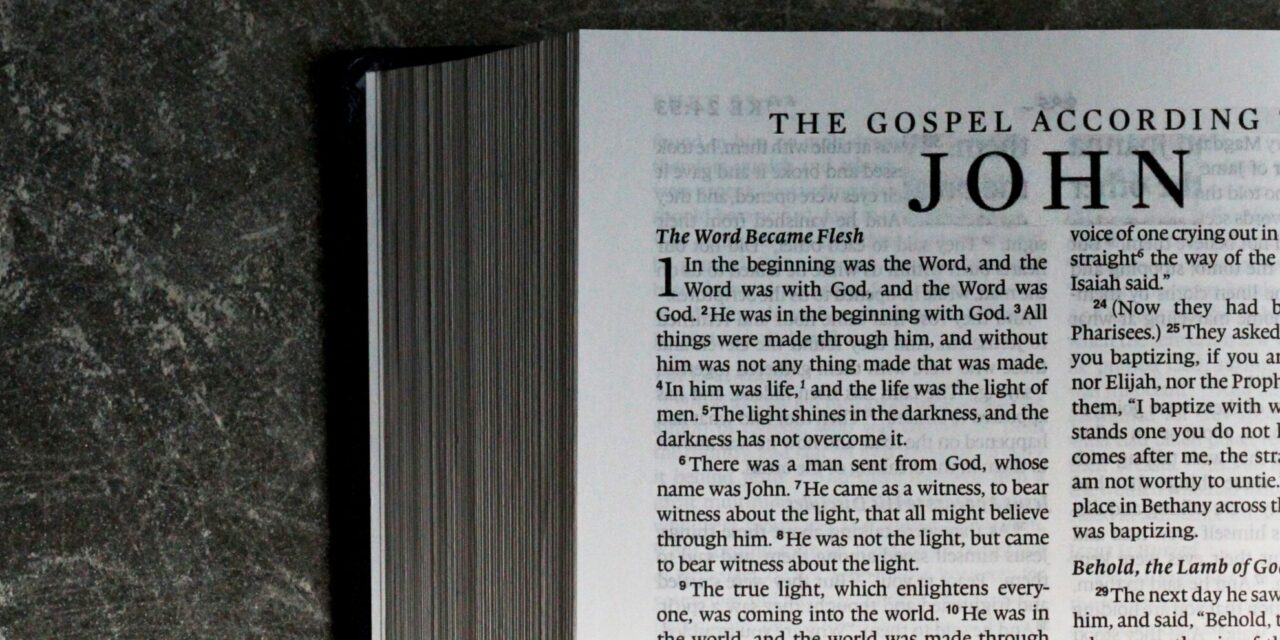
Commenting on the incarnation of the Word in John 1, where we are told that the Word was with God, the Word was God, all things were made through Him, and the Word became flesh and dwelt among us, Augustine says, “How without price is that which surpasses all things?” Any purchasable thing is either equal to its price, below its price, or exceeds it. You either pay what something is worth, you get a bargain, or you overpay.” Then Augustine argues that nothing can be equated to the Word of God, nothing can be above it, and nothing can be below it, because all things were made through it.
He says that if we may speak this way: “The price for procuring the Word is the procurer himself.” Normally, when we buy something, we give something outside of ourselves—money, goods, wealth—and receive something we did not previously have. The price leaves us, and the object comes to us. “But with the Word of God,” Augustine says, “whoever would procure it must not seek anything outside himself to give, but must give himself. And when he does, he does not lose himself.”1
Unlike ordinary purchases, where what you give is gone, giving yourself to the Word results in finding yourself. You do not lose your identity; you receive your true identity in Christ.
This reinforces the point: the Word of God has no exchangeable value. It cannot be bought or sold. It requires self-surrender, not payment.
Finally, Jesus is the Word
If that were not enough, Revelation 19 makes the identity unmistakable. John sees heaven opened and sees a white horse. Its rider is called Faithful and True. He judges and wages war in righteousness. His eyes are like blazing fire. He wears many crowns. He has a name known only to Himself. He is clothed in a robe dipped in blood, and His name is the Word of God. Jesus Christ is the Word of God incarnate. He is the truth. He is eternal. He sanctifies His people by His Spirit.
Because Jesus is the Word, and because Jesus cannot be bought or sold, the Word that reveals Him cannot be bought or sold either.
Conclusion: The Word of God is priceless
The Word of God is priceless—not because it lacks value, but because nothing can be exchanged for it. Nothing we could produce, even hypothetically, can compare to it. Even if we were wholly holy, we could not make anything comparable to God’s eternal Word. How much less can those of us still carrying the stain of sin offer anything of equal worth? The Word of God is not merely words on a page.
Everything expressly set down or necessarily contained in Scripture is the thought of God revealed to His people by His Spirit. These thoughts are meant to be on our lips, to sanctify us, to edify one another, and to testify to the Son of God who humbled Himself, became man, died for sinners, and was exalted above every name.
The Word that teaches us Christ is worthy of reverence. Its pricelessness is established both by explicit testimony in Scripture and by sound theological and logical reasoning.
¹ Augustine, Tractates on the Gospel of John, Tractate 2.10–11, in Nicene and Post-Nicene Fathers, First Series, vol. 7, ed. Philip Schaff (Buffalo, NY: Christian Literature Publishing Co., 1888), 13–14.






Robert, thank you very much for the kind words, brother. That sincerely means a lot to me that your spirit…