This is a message I delivered on 12/07/25 at Piqua Baptist Church for our quarterly members’ gathering. You will find the video recording embedded below, along with the transcript.
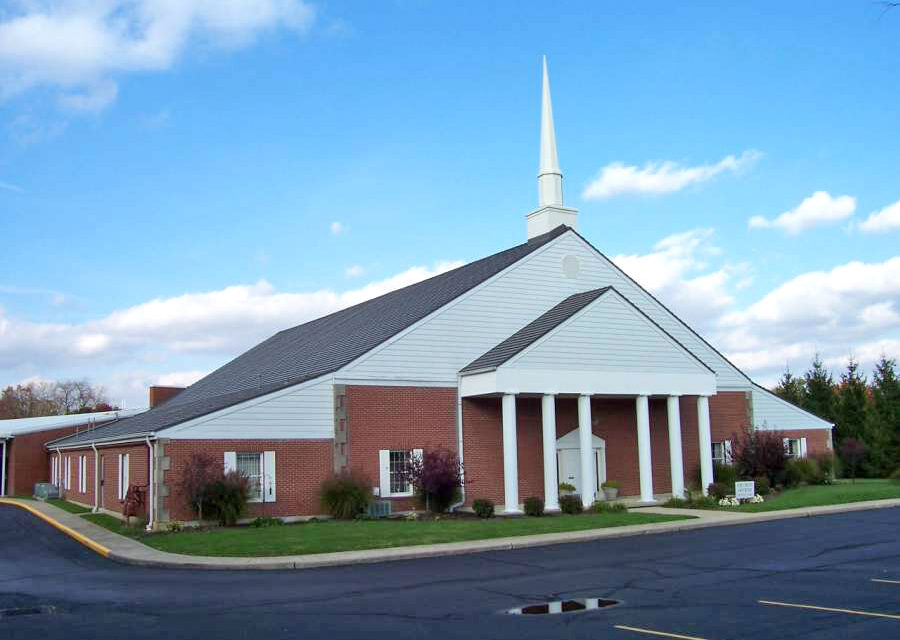
If you’ve entered our parking lot, you’ve noticed that big LED sign to your left that says “Piqua Baptist Church”. But have you ever thought about that? What is a Baptist church? Does that really even matter?
The word Baptist means more than just the last name of John. Though, I will point out for the record, John the Baptist and Winnie the Pooh share the same middle name and both enjoyed eating honey. I’m kidding of course, “Baptist” is not John’s last name, just like “Christ” is not Jesus’s last name, these are titles.
As a Baptist church, there are some distinctives in doctrine and practice that distinguish us from other faithful, Spirit-filled, gospel believing churches. Churches whom we have absolutely no hesitation to say are well within the realm of orthodox, biblical Christianity. You may remember from awhile back Pastor Jamie delivered a sermon on Church unity that included some “priority level” rings for Christian doctrine.
For example, lets say there are 4 rings, 3 inside of the outermost. The center ring includes first tier doctrines, or doctrines that are most important, these would include things like: Justification by faith alone, the Deity of Christ, the Trinity, etc. These are things that, if not affirmed, put you outside of the Christian faith. Churches who believe these fundamental things are our brothers and sisters in the Lord. These are things that you must profess faith in in order to be saved. These are the sorts of things you will find in the Nicene Creed we play every Lord’s day before service.
Outside of that first ring, it gets a bit subjective based on who you are talking to, as far as the level of importance of doctrine. Some people may put things in the second tier that others may put in the third or fourth tier. However, you can be a brother in Christ and disagree on things inside of the second, third or fourth ring.
Generally speaking, things inside of the second ring determine where you’re going to go to church. They do not rise to the level of heresy, like disagreeing with the things in the first ring, but they likely will make it difficult to worship together under the same roof in good conscience. In that second ring, you’ll find things like: baptism, how we practice the Lord’s Supper, church membership, church governance, etc.
For example, you could hold to a Presbyterian doctrine of church governance and be a good standing member within our church body here at PBC, if you can do this in good conscience and without sowing disunity in the church. But, generally speaking, you probably wouldn’t want to, because you believe we Baptists get things like church governance wrong. Church governance is just what it sounds like- how do we, under the headship and authority of Christ, govern and run our local churches? We all look at the pages of God’s word in order to draw from them how we as a church operate, and this is something we just have a disagreement on. But, we will find out who’s right in heaven, when they have seen the light and become Baptist. Remember, we both believe that first necessary ring, so we can sit at the table of orthodox Christian faith, open our Bibles, and discuss these things reasonably as brothers.
It is this doctrine of church governance that I want to focus on for a bit. You may have heard the term “autonomy of the local church” before. Or, maybe, if you’re not a theology nerd like me, you haven’t. The term “autonomy of the local church” simply means, the local church is self-governing. We do not rely on outside authorities, religious or otherwise, to tell us how we should operate within our local church body. This differs from several other denominations, but let’s pick on our Presbyterian friend again to make the point. Within the Presbyterian denomination, the governing body over each local church and its elders is what’s called a “Presbytery”. (Get the name now?) The Presbytery will ordain ministers and then assign those men to their respective local church bodies, where they will shepherd their flocks.
We, as Baptists, do not agree with this form of church governance in ordaining and appointing elders. We do not rely on an outside source to do these things, like our brothers in the Presbyterian church. We believe again that each local church body is autonomous, and we believe the proper way to go about things, based upon the New Covenant Church structure in the New Testament, is that each one of those churches are responsible for assigning and ordaining their own elders. So as you can see, this is an important matter to be sure, it may, and usually does, rise to the level of someone not wanting to attend a church who believes otherwise.
A Baptist form of church governance entails more than just how elders are ordained and appointed. Our elders are the shepherds of our church, the head of our church is Jesus Christ, and we, as the congregation, hold authority in the church as well. We meet quarterly to discuss finances and vote on matters that will be implemented in the church. We affirm elders who are appointed by our elders, and we exercise church-discipline as a church body. These things are all very Baptist, which other denominations do not share in.
I want to clarify, church autonomy does not mean church isolation. We are more than happy to cooperate and fellowship with outside churches. We, as the body of Christ, share the same mission, so we are happy to align and partner with churches to do various things. PBC has recently become a member of GDAB for example, but GDAB will not tell us who is an elder in our church or what color our carpet should be; that authority falls to the membership inside of these walls.
So why do we do things this way? Where did we get our understanding of the authority of the local church? For time’s sake, let’s focus on one piece of Baptist polity: the appointing of elders, though Baptist church governance includes much more.
If you’d like to follow along, turn to Acts 14:21–23:
21 When they had preached the gospel to that city and had made many disciples, they returned to Lystra and to Iconium and to Antioch,
22 strengthening the souls of the disciples, encouraging them to continue in the faith, and saying that through many tribulations we must enter the kingdom of God.
23 And when they had appointed elders for them in every church, with prayer and fasting they committed them to the Lord in whom they had believed.
In the first-century church, shortly after Pentecost, Paul and Barnabas planted churches and made disciples. This is the setting of this passage. Notice what they did: before they left, they appointed elders in each local church. They did not send word to a presbytery or a synod to assign elders from outside. They themselves, as the church planters and existing elders, appointed qualified men within those local congregations. In this we see an early pattern of local-church authority in recognizing and appointing its own shepherds, and this is one place Baptists draw our practice of governance.
However, this does not mean the elders “run the show” while the congregation merely watches. Christ has given pastors the duty of shepherding His flock, but His flock is a Spirit-indwelt, royal priesthood, not a passive audience. As a congregation, we live in submission to our elders, yet we also possess real responsibility and authority within the local church—authority that must stay within the bounds Scripture assigns to us. And that is precisely why we are gathered here tonight. It is a very Baptist thing to do: to meet, pray, discuss the Lord’s work, and, when needed, vote together as the body of Christ in this local church.
You’ll notice in Acts that Paul and Barnabas appointed the elders, not the congregation. Yet the congregation’s role remains vital. Christ calls men into ministry; elders recognize and ordain those men; the congregation affirms them. Jesus does the calling. The elders, in their God-given authority, confirm that calling through examination and ordination. And we as the congregation respond, “Amen,” as we recognize their qualifications and hold them accountable to the Word of God. Christ has not given the congregation the authority to ordain or remove elders, but He has given us His Spirit, His Word, and the responsibility to test all things.
Now, you may wonder, “Doesn’t all this doctrinal difference and denominational variety create disunity?” In fact, it does the opposite. Jesus Christ is the sovereign Head of His Church—capital C—which includes all believers who hold to the essential truths of the faith. Since He is the Head, the various denominations that exist under His lordship are allowed by Him. This may surprise you, but Christians sometimes disagree about what the Bible says. That doesn’t make the Bible subjective. God intended one meaning; we seek, by the Spirit, to understand it. If a local church contains people with radically different convictions on second- or third-tier doctrines, conflict and even division are almost inevitable. In His wisdom, Christ has permitted a degree of separation among local churches so that believers can worship according to their biblically informed conscience.
We gather tonight in a building founded over two centuries ago by men who believed these things. The word Baptist meant something to them. It means something for us too. First and foremost, they were Christians—as we are. But as you know, put a group of Christians in a room and talk doctrine for five minutes, and disagreements will emerge. For the sake of unity, it is better to be clear and upfront about what we believe, and to worship in a church that teaches what we are convinced the Scriptures say. This is Christ’s Church—full of flawed people seeking truth, disagreeing at times, and through those disagreements being driven back to the Word of God.
So when the word Baptist sits on the sign out by the road, that is a good thing. It tells the world—and it reminds us—what we believe and how we seek to obey Christ in this local congregation. And that is why we are here tonight at our members’ meeting. We stand in the path our Baptist forefathers walked 213 years ago.
May the Spirit of God guide us as we read His Word and grant us understanding.







Robert, thank you very much for the kind words, brother. That sincerely means a lot to me that your spirit…