
What the Book of Ruth Teaches us About the Importance of Regenerate Church Membership
[Adapted from a sermon transcript]
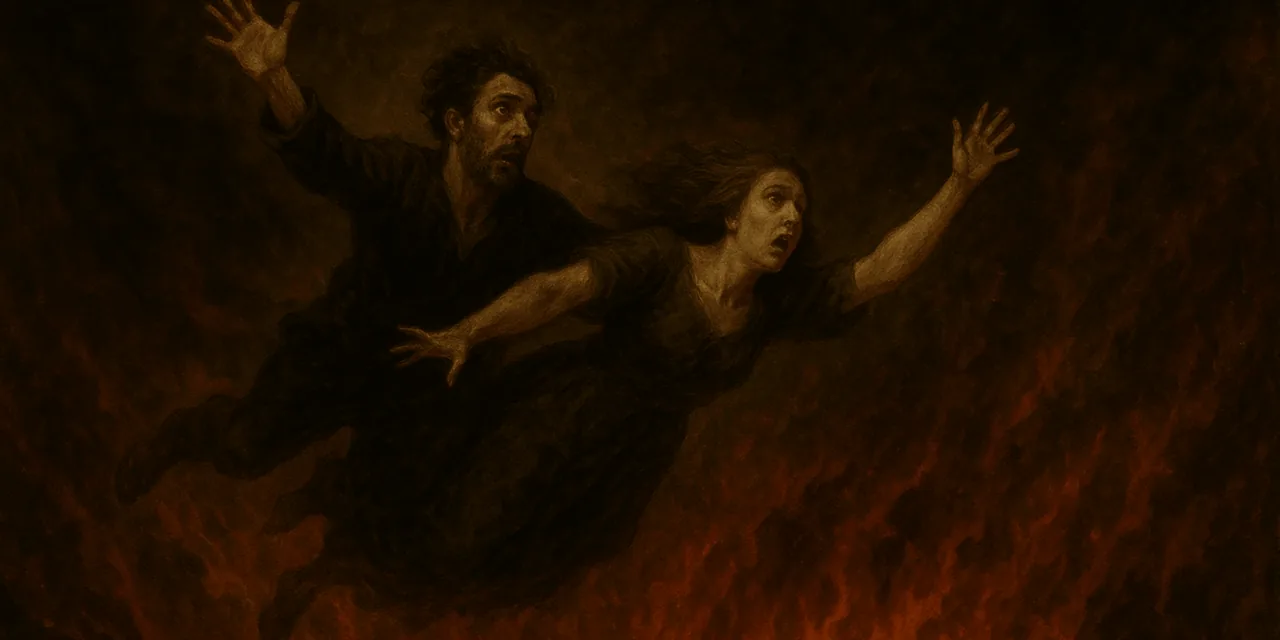
In Ruth 1:14, Orpah abandoned Naomi with a kiss. She had an emotional experience (v.9). She made a public profession (v.10). But ultimately, she freed herself from the burden of following Naomi back to the Promised Land. Her faith was revealed to be never genuine.
Today, I believe there’s a reason that many false professions are not shown to be false professions.
How is it that so many people in the Bible Belt (where I happily live) can claim to be Christians, but dabble in church here or there, live with someone who’s not their spouse, be sexually immoral, be addicted to pornography, be doing drugs, loving sin, loving the world—and yet proclaim Christ? How is this possible? Some of them are in churches. Some of them are teaching Sunday school classes. Some of them may be serving as deacons or pastors.
How can this even be possible?
Answer: No one ever comes alongside them and says, “This is what it looks like to be a Christian. This is what it looks like to follow Christ. This is what the Bible says it means to be a disciple.”
We’re really prone in the South, with our Southern politeness, to keep our mouths shut. Maybe the best spin we could put on it is that it comes from Christian kindness. We don’t want to be too confrontational. Someone—perhaps a close family member, a mother, brother, cousin, wife, or husband—says, “Well, I think of Christianity like this,” and we just keep our mouths shut.
We don’t teach that disciples kill sin, deny self, and grow in their love for the church. We don’t teach that the Christian life is a battle. It’s a constant fight. Read Romans 7. “Wretched man that I am!” You’re worn out. You press on. You press on. You press on.
But in the name of love, ought we not tell people what it means to follow Christ?
Faithful churches do this. Someone may say, “Well, you’re trying to be judgmental. If someone wants to join the church, you won’t just let him immediately join. If someone wants to be baptized, he has to counsel with the elders. You have to go through the Scriptures with him. You give him a copy of the confession. Why do you do all these things?”
Because we understand the reality of false conversion.
We understand that we don’t have an infallible wand to wave, but God has given us means. In the name of love, we ought to tell people what it means to be a Christian. In the name of love, we refuse to boil conversion down to saying a prayer or asking Jesus into your heart and then going along your merry way.
I wonder how many people have joined a church and have never been asked the most basic of questions: What is the gospel?
You might think I’m being hyperbolic or stretching things to make a point, but I assure you I am not. People can join a church by simply answering this question: “Are you saved?” “Why yes, I am.” “When did you get saved?” “I got saved back in 2014 at a church camp.” And that’s it.
That’s it.
We don’t understand the gospel in our culture. I’m speaking of the South here, and even my own community of Perryville. We don’t understand the sufficient merit of Christ: that He has paid it all, that He has done all the work, that He is the Son of God who has assumed human nature—truly God and truly man—obeying the law. Mankind is broken, and there is nothing you can do to add to Christ’s work. Nothing. You don’t come alongside and say, “Let me help You, Jesus.” He has done it all.
He died on the cross as our substitute, paying the debt for all who call upon His name—a propitiatory, wrath-satisfying sacrifice. On the third day, He rose again from the dead so that those who trust Him might be clothed in His own righteous robes.
You don’t merely need forgiveness of your sins. You need a righteousness with which to enter the courts of heaven. Jesus Christ says, “I will clothe you with My own righteousness, even as I have paid for your sins in full with My own blood.” He rose again from the dead and adopts sinners into God’s family.
This is the good news of the gospel: You are separated from God because of your sin and rebellion against Him. If you trust Christ, you will be forgiven and reconciled to God. You will no longer be an enemy, but a son or daughter.
Christ alone has paid the full price of our redemption.
Yet everyone who follows Him must count the cost of discipleship.
It is a road marked by suffering. It is a road marked by the rejection of this world. It is a road marked by identification with Christ, which means you will miss out on some things in life. Do you not see this in the book of Acts? Jesus teaches it in the Gospels. We learn it from the rest of the New Testament and from the whole Bible. We see it throughout church history.
Following Christ makes you an enemy of this world. It makes you an enemy of your own flesh. It makes you an enemy of the forces of darkness in the spiritual realm. The things you once loved, you now hate. The friends you once knew may no longer want to be your friends. Even your own family may sometimes forsake you.
But now, in Christ, you have a new identity—and He is sufficient. He is enough. His people are outcasts in the world, but it is the Father’s good pleasure to give them the kingdom.
This is what it means to follow Christ.
May we strive—all of us, because the pastors do not bear this responsibility alone—to do everything we can to be a place where false faith is never able to flourish.
False faith flourishes when church members remain closed up—when you can never get close to them, look them in the eye, or really talk to them about how things are. They want to keep you at arm’s length, and the people on the other side are content with that. They are like two ships passing in the night. They barely know one another because they do not want to reveal everything happening inside—all the things with which they are still wrestling.
That is where false faith flourishes. In a place that does not take sin seriously. In a place where church membership is not handled properly. In a place where church discipline is altogether absent.
We have a responsibility. It is not our desire to snuff out weak faith, but it ought to be our desire that no Orpah would ever be comfortable in your local church. We want to point to Christ, explain repentance, explain turning from sin, explain hating what you once loved, explain the Christian life, explain grace—and in all of that: gospel, gospel, gospel, gospel.
This is what regenerate church membership looks like in healthy churches.
We do not want to confuse weak faith with false faith. Weak faith still clings to a strong Christ, but false faith ultimately abandons Him for the world or for sin.